
Kingdom flooring PDF
Why the flooring PDF matters
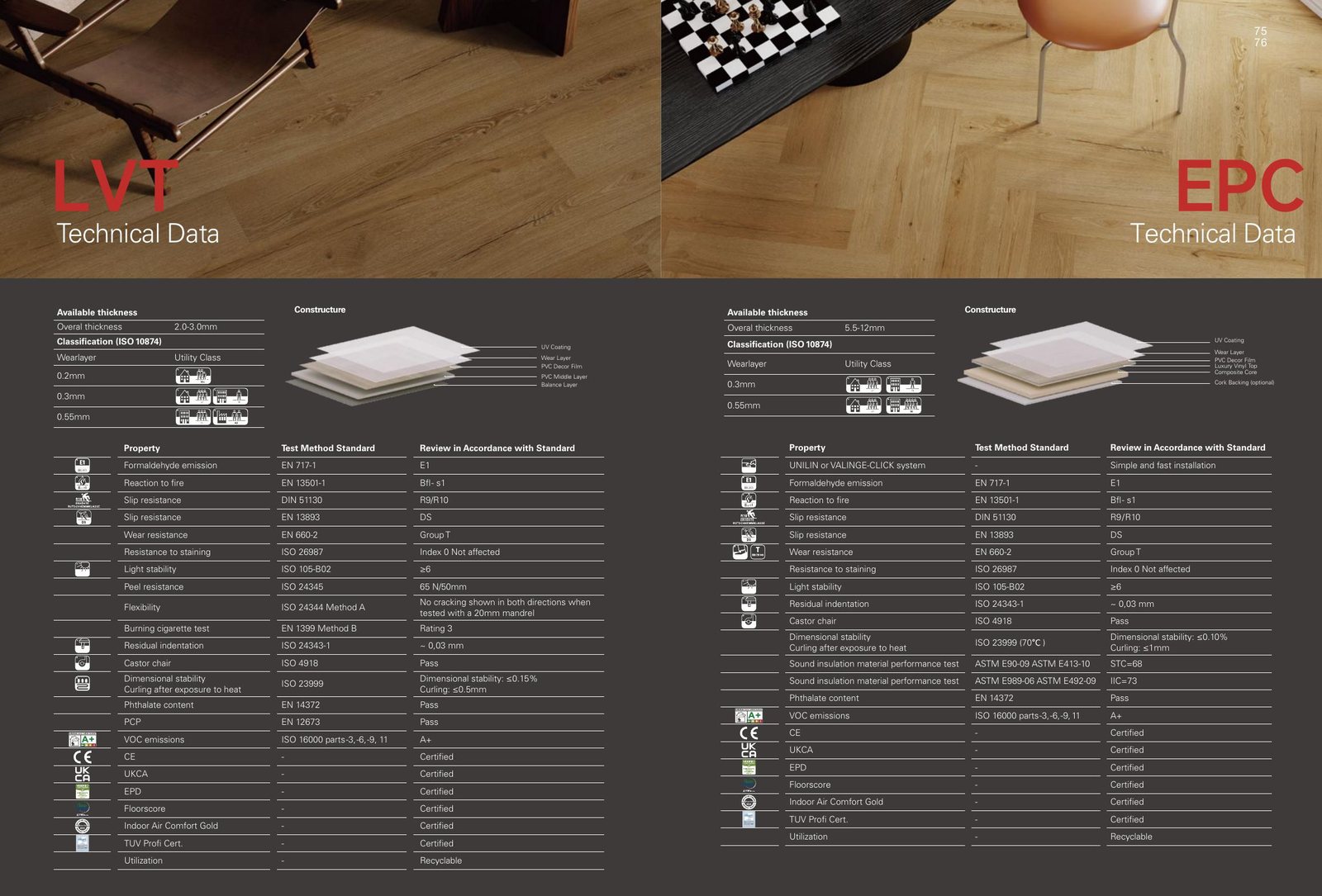
The flooring catalog gives ADU Cost a real finish vocabulary. Instead of saying premium flooring, the site can explain LVT, SPC, EPC, and PET finish families, why waterproof and dimensional-stability language matters in a small dwelling, and why a finish allowance should name the material family before the buyer trusts the number.
How to turn finish rows into better traffic
High-quality buyers search for cost, but they also search for confidence. A flooring guide lets the site answer questions about waterproof flooring for ADUs, low-VOC flooring, sound ratings, wear resistance, and finish allowance planning. Those topics attract people who are closer to selecting a product, not only people chasing the lowest square-foot price.
How to use the certificate rows safely
The PDF lists certificate and test rows. The website should say the catalog lists those rows for product families; it should not say every future selected color, batch, backing, adhesive, underlayment, or installed ADU is certified unless current proof is supplied. That boundary makes the site stronger because serious buyers can feel the difference between documentation and marketing.
What the calculator should ask
A real estimate should ask which finish family is being used, how many square feet are included, whether waste is included, whether transitions and trim are included, who installs the flooring, and which certificate or test report must be collected before procurement. That is the difference between a decorative finish page and a useful cost page.
How this creates better traffic.
Search traffic is only valuable when it brings the right buyer. A thin ADU page attracts people who only ask for a number. A PDF-based page attracts people who are already thinking about approval evidence, finish proof, local permit boundaries, energy notes, equipment scope, and installed-cost risk. Those buyers submit better notes and are easier to qualify.
That is why the page links into the calculator rather than ending with a vague sales pitch. The reader can turn the document into a working estimate by keeping known costs, unknown allowances, and source-proof questions separate.