
Model comparison is a high-quality traffic lane
People searching modular ADU are not always ready to talk to a contractor, but many are trying to decide whether the product category can fit their lot and budget. That makes floor-plan comparison useful traffic. It filters casual visitors from buyers who are thinking about bedroom count, rental use, family needs, and installed cost.
ADU Cost has a good reason to create this page because the source packet contains two model paths. The 1L path is tied to R-22348. The 3L path is tied to R-22345. Instead of writing generic modular ADU copy, the site can compare the buyer logic behind those two paths.
The 1L path: smaller footprint, not zero fixed costs
The one-bedroom 1L path can be attractive when the buyer wants a guest unit, rental suite, parent suite, office-plus-sleeping space, or a compact backyard residence. Smaller size can reduce product, finish, freight, and some assembly assumptions. It may also fit sites where a larger building would create access, setback, or usability problems.
The mistake is assuming every cost shrinks with size. Foundation setup, utility trenching, permit review, inspection visits, project management, crane mobilization, and electrical service decisions can remain meaningful even for a compact unit. That is why the calculator should keep fixed and variable costs separate.
The 3L path: larger dwelling utility with a fuller budget story
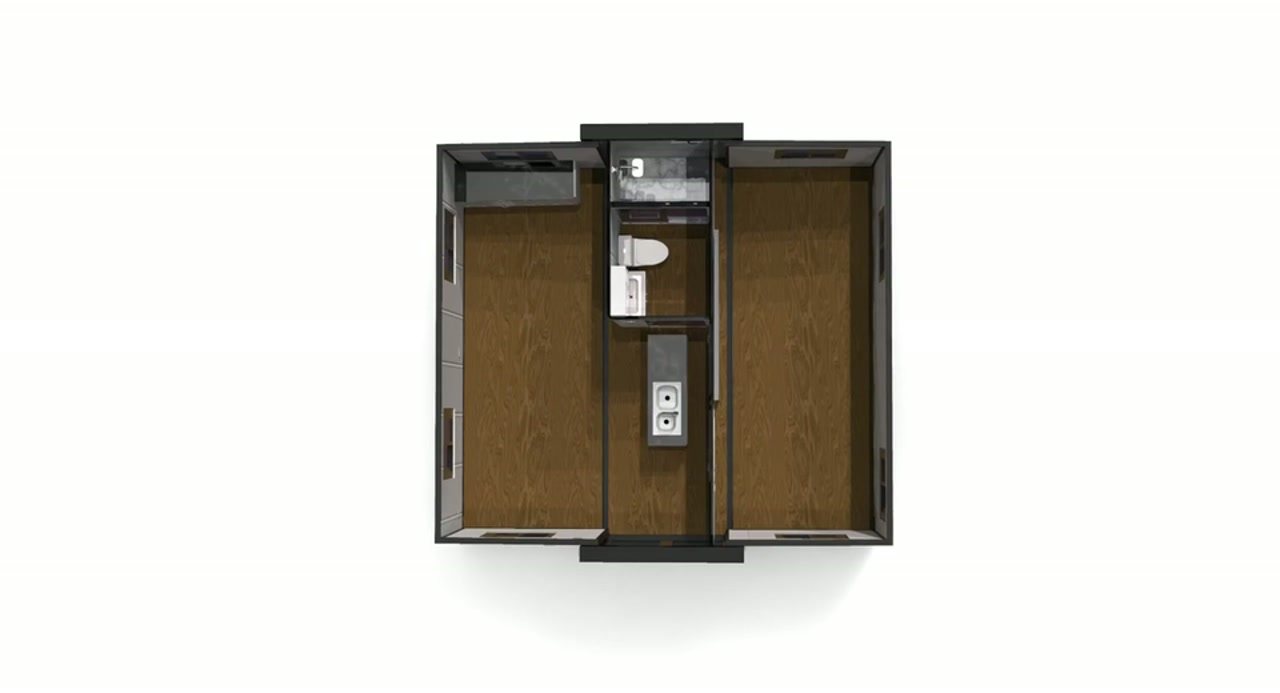
The R-22345 packet gives the 3L path more concrete data: 962.40 sf gross area and 931.63 sf net indoor area. The title context presents it as a three-bedroom ADU with kitchen on the right side. That makes it a different buyer decision than a compact studio or one-bedroom accessory unit.
A larger ADU can support different uses: multigenerational housing, more valuable rental product, a longer-term family residence, or a larger guest dwelling. It can also increase product cost, finish quantities, shipping and setting requirements, utility loads, inspection complexity, and the need for a tighter local site plan. The bigger model may produce more value, but only after the full installed budget is visible.
The fair comparison method
A fair comparison starts with the same categories for both models: factory package, delivery, setting, foundation, utilities, permit fees, finishes, and contingency. Then the buyer can see what changes with size and what does not. A price-per-square-foot comparison by itself can mislead because a smaller unit can show a higher cost per square foot while still requiring less total cash.
This page should push the reader to use the calculator twice: once for the 1L path and once for the 3L path. The winner is not always the lower number. The winner is the model that fits the use case, site constraints, rental or family plan, and total budget with the fewest hidden assumptions.